
Sports Glove Sample Approval for Bulk Production
Approve a sports glove sample in three stages: first confirm fit and handfeel on the physical glove; second approve colour and workmanship against physical references; third identify the valid signed production reference and remove obsolete versions.
A sample is valuable only when cutting, decoration, sewing and quality control can repeat the version the buyer approved. The process below turns subjective design decisions into a practical production handoff.
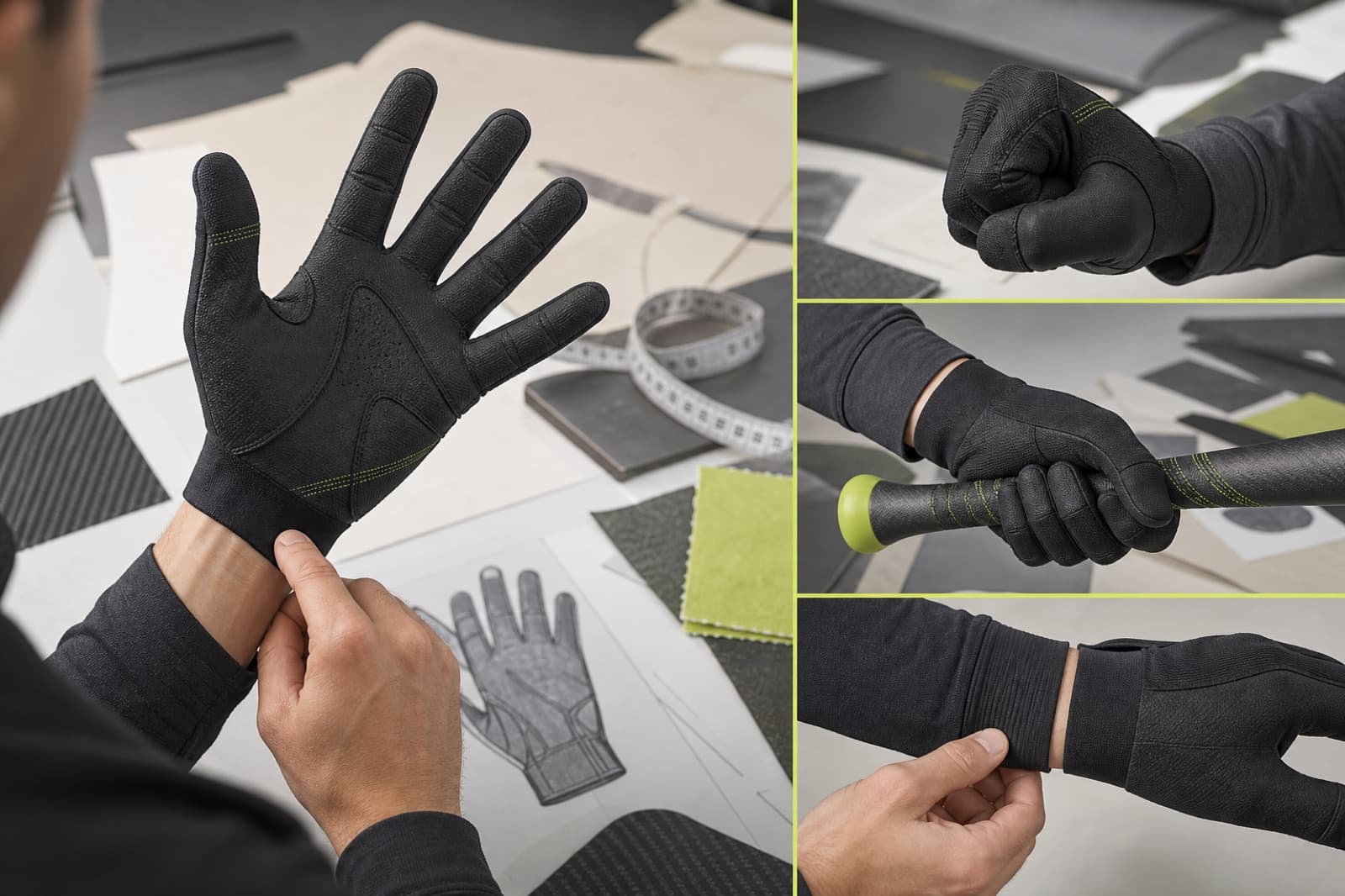
A Three-Stage Sign-Off System
Gloves are three-dimensional, flexible products. Similar flat measurements can feel different because palm material, padding, lining, seam bulk and stretch behaviour interact on the hand. Approval therefore has to follow both use and manufacturing.
Stage 1: Approve Fit and Handfeel on a Real Hand
The buyer should receive the physical glove. Review palm width, finger length, wrist opening, thumb movement, grip position and any pressure created when the intended movement is performed. A consistent tester helps compare versions, but a brand should also widen the test to the target athlete or experienced user.
Feedback should identify a location and an action. “Pressure at the index fingertip during a closed handlebar grip” is actionable; “the glove is tight” is not. Record the sample version, size, tester, materials and the exact movement used.
Stage 2: Approve Colour and Workmanship with Physical References
Screens and photos are useful for speed but do not provide a complete colour standard. Compare the glove with the agreed Pantone reference, approved swatch or print strike-off under a consistent light condition. Approve the whole material combination, not isolated components.
Replace “good workmanship” with observable details: seam alignment, binding width, reinforcement placement, logo method and position, strap orientation, padding, labels and packaging details. If the left and right gloves are intentionally different, both hands must be reviewed.
Stage 3: Sign and Control the Production Reference
The approved glove should be tied to a project reference, version, size, approval date, current material list, artwork and any separate swatch or report. A signed sample does not replace every written specification, and a specification does not replace the three-dimensional sample. They work together.
When an approved point changes, retrieve or clearly void the old reference, approve the new one and replace every active copy at the affected workstation. Two valid-looking versions in circulation create avoidable production risk.
Sample Approval Table
| Stage | Focus | Evidence | Output |
|---|---|---|---|
| 1. Fit and handfeel | Comfort, sizing, grip and movement | Physical wear test in intended materials | Fit direction recorded |
| 2. Colour and workmanship | Materials, decoration and build quality | Pantone, swatches, strike-offs and complete sample | Visible details approved |
| 3. Signed production reference | Lock the current production standard | Approved sample plus written specification | One valid reference version |
Buyer checklist
- Test the physical glove on the intended hand and movement.
- Record pressure, movement and excess-material points by location.
- Compare colours and decoration with physical references.
- Confirm labels, artwork, seams, reinforcement and closures.
- Identify the exact current sample version and approval date.
- Remove obsolete references when a revision is accepted.
Frequently Asked Questions
Yes. Photos and measurements support communication, but handfeel, internal seam pressure, material recovery and sport-specific movement require a physical wear test.
Record the change, identify every affected pattern, material, artwork or process, remove the previous active reference and approve a clearly identified new version before continuing.
No. Digital approval is useful communication, but the production handoff should identify a controlled physical sample or approved component together with the written specification and version record.