
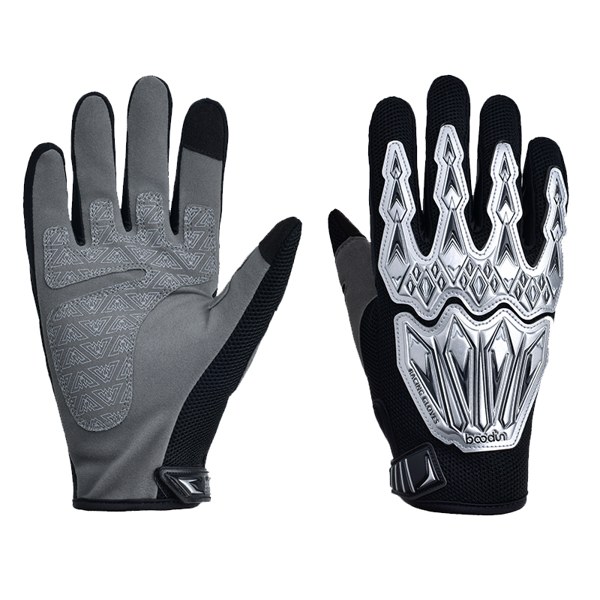
Choosing a palm material is not only a question of price or brand. For an OEM sports glove, the important question is whether the approved material can pass the same performance checks that will be used on the finished order.
A 12,000-pair lesson about buyer-specified microfiber
In June 2021, we produced 12,000 pairs of custom gloves for a European extreme-sports brand. The buyer’s design team specified Japanese Kuraray microfiber for the palm. It was a reputable material, and the initial sample review was completed before production began.
During production, the brand’s QC team applied its own test protocol. The material showed colour transfer under friction and surface shedding. Those results had not appeared in the initial sample review.
We checked alternatives available at the time, including Kuraray Clarino N8050 and Korean SUEDE DEUCE microfiber in 0.9 mm. Under the brand’s QC protocol, both showed the same colour-transfer and surface-shedding behaviour. The issue was not simply that one microfiber was better or worse. The material approval and the final inspection were using different standards.
The delivery window was missed. The buyer accepted the goods at a discount rather than scrapping the complete order, and both sides shared the cost. The exact client name is confidential, but the production record changed one part of our process: a material name alone is not a complete material specification.
12,000 pairs for a European extreme-sports brand.
Japanese Kuraray microfiber was specified and approved at sample review.
Final inspection used an unshared friction-test protocol.
Colour transfer and surface shedding delayed the delivery window.
Agree the test method and keep a sealed sample before bulk cutting.
What actually went wrong
Kuraray microfiber is widely used in glove production. The case was not about a counterfeit or obviously low-grade material. The designer approved the material against one set of checks; the QC team used another. Neither the test method nor the pass/fail criteria had been documented as part of the sample approval.
This risk is most common when a buyer names a material supplier but does not state what the material must do. Colour fastness, surface durability, abrasion resistance, thickness and friction performance are different requirements. A supplier name does not replace a written performance standard.
How we now handle buyer-specified materials
- Agree the test standard, not only the material name. When a buyer specifies a material, we ask for the test method and pass/fail criteria that their QC team will use. We can check the production material against that agreed requirement before bulk cutting.
- Keep an approved physical reference. The agreed material sample should be sealed and signed by both sides. It becomes the production reference; a supplier datasheet or a material name on its own is not enough.
- Write the responsibility boundary into the approval record. The sample approval should state the material, colour, batch reference where available, test method and acceptance criteria. This protects both buyer and factory if a different test is later introduced.
There is a practical limitation: even the same microfiber product code can vary between production batches. Dye lots, surface finishing and warehouse time can affect colour and feel. For that reason, a production-batch test cut is useful when the requirement is strict or the order value is high.
Material choices by glove zone
| Area | Typical choices | What to confirm before sampling |
|---|---|---|
| Palm | Synthetic leather, microfiber, PU, suede-like material, silicone grip areas | Grip, abrasion resistance, friction/colour test and thickness |
| Back of hand | Elastic fabric, mesh, neoprene, softshell, woven fabric | Breathability, stretch recovery, fit and warmth |
| Padding | Foam, gel, EVA or layered reinforcement | Shock absorption, placement, compression and thickness |
| Lining | Fleece, brushed fabric, thin knit or no lining | Warmth, moisture handling and seasonality |
| Closure | Hook-and-loop, elastic cuff, pull tab or extended wrist support | Fit, adjustability and repeated-use durability |
Questions to settle before approving a material
- What sport, user and sales channel is this glove for?
- Which test method will QC use for friction, colour transfer or abrasion, and what result is acceptable?
- Does the signed sample match the intended production material, colour and finish?
- Is a production-batch test cut needed before bulk cutting?
- Which requirement matters most if there is a trade-off: grip, durability, breathability, cost or appearance?
For a quick pre-sample worksheet covering palm, back fabric, lining, padding and trim, use our Sports Glove Material Checklist for OEM Sampling.
Need a material review before sampling?
Send your glove category, target quantity, reference photos, desired material and any QC test method. BURTONO Sports Gloves Factory will help identify the points that need to be agreed before production.